
Emergency Water for Your Family: Store It, Make It Safe, Filter It
How much water to store per person, how to make it safe by boiling or with plain bleach, and which portable filters to pack. Based on Red Cross, CDC, EPA.
By Randall R. Russell, USMC Veteran
Health note: This is general information, not medical advice. Follow product labels and your doctor or pharmacist.
Water is the first thing your family needs in a storm, a power outage, or any other emergency. This guide walks you through it in order. Store water first. Learn where safe water hides in your home. Make water safe by boiling or with bleach. Use a filter as your backup, not your only plan.
Safety steps below follow published CDC/EPA/USDA guidance, which we've checked against the original sources. We're not medical professionals, so use your own judgment and ask a qualified professional about your family's situation.
How much water do you need?
The American Red Cross says to store 1 gallon of water per person, per day. That's a 3-day supply if you must leave home, and a 2-week supply if you can stay home. Kids, nursing moms, sick family members, and hot weather can all mean you need more.
| People | 3 days (go-bag) | 2 weeks (home) |
|---|---|---|
| 1 | 3 gallons | 14 gallons |
| 2 | 6 gallons | 28 gallons |
| 4 | 12 gallons | 56 gallons |
| 6 | 18 gallons | 84 gallons |
Planning food next? Our 72-hour food guide covers what to eat, and our backup power guide covers keeping devices running. Pets need their own water bowl and a stored supply too. Store bought bottled water in its sealed container. If you fill your own jugs, use food-grade containers and swap the water every 6 months.
Step by step
- Store water first. Sealed store-bought water is the safest choice, says the CDC. You can also fill clean, food-grade jugs. Never reuse a jug that held bleach or bug spray. Aim for 1 gallon per person, per day, for 2 weeks if you can.
- Label and date each container. Write "drinking water" and the fill date. Replace homemade-filled water every 6 months. Keep it cool, dark, and away from gas or cleaners.
- Learn your home's hidden water. If stored water runs out, look inside your own home. Safe sources include the water heater tank and melted ice made from clean water. The juice in canned fruit and vegetables counts too. The toilet tank is OK if the water is clear. It must have no cleaner or color tablets in it. Never use the bowl.
- Boil unsafe water first, if you can. Bring it to a full, rolling boil for 1 minute. Above 5,000 feet, boil for 3 minutes.
- No way to boil? Use plain bleach. Check the label for the strength of the bleach (the percent of sodium hypochlorite). EPA's guide is 8 drops of 6% bleach per gallon of clear water, or 6 drops of 8.25% bleach. Use a clean dropper. Stir, then wait 30 minutes. The water should smell a little like bleach. If it doesn't, repeat the same dose and wait 15 more minutes.
- Pack a portable filter for go-bags and cars. Use it anywhere you may need to drink from a stream, tap, or unknown source.
- Add a home filter if you want extra everyday filtering for tap water and you have steady power.
What a filter can (and can't) do
A filter works by pushing water through a screen full of tiny holes, called pores. The holes have to be small enough to trap germs. The CDC says the absolute pore size must be 0.3 micron or smaller to trap bacteria. Not every filter is that fine, so check the label. The filters in this guide are 0.1 to 0.2 microns, so they trap bacteria and parasites like Giardia. But portable filters like these do not trap viruses. Viruses are even smaller. A filter should back up boiling or bleach. It should not replace them when you're worried about viruses.
Sometimes you only have a filter, with no way to boil or add bleach. When that happens, add a chemical disinfectant to the filtered water afterward, if you have one. This extra step kills any viruses or bacteria that slipped through.
Stay safe
Do:
- Store water in a cool, dark spot, away from chemicals and sunlight.
- Boil water for 1 minute (3 minutes above 5,000 feet) any time you are unsure it is safe.
- Use only plain, unscented bleach labeled 6% or 8.25% sodium hypochlorite, stored at room temperature for less than a year.
- If water looks cloudy, strain it through a clean cloth or coffee filter first. Then use double the bleach: 16 drops of 6% bleach per gallon (12 drops of 8.25%).
Don't:
- Don't drink flood water, or use it to wash dishes, brush teeth, or wash food.
- Don't use water you are unsure about to make ice or baby formula. Make it safe first.
- Don't drink from the toilet bowl, a heater radiator, or a boiler tank.
- Don't drink pool or spa water. It is fine for washing and cleaning only.
- Don't use water that may have fuel or chemicals in it. Boiling and bleach cannot make it safe.
- Don't use scented bleach, color-safe bleach, or bleach with added cleaners.
- Don't count on a filter alone. Most filters do not remove viruses.
Gear we trust, and why
Want more options? See every water pick on our water gear page, read the full water filter comparison, or browse all Gear Reviews.
Sawyer Mini is a tiny, 2-ounce filter rated by the maker for up to 100,000 gallons. Pack one in every adult's go-bag. It filters bacteria, parasites, and microplastics. You do need to backwash it now and then to keep the flow strong. Replace it if you think it ever froze.
Sawyer Mini portable filter (paid link)
Sawyer Squeeze uses the same 0.1-micron absolute filtration as the Mini, with faster flow, and the kit adds two pouches and gravity tubing. It's a good step up when the whole family is filtering water together.
Sawyer Squeeze filter (paid link)
LifeStraw Personal is a simple straw filter, good as a starter filter or for a kid's bag. The maker rates it for up to 1,000 gallons and says it removes bacteria, parasites, and microplastics. Honest downside: the maker says it does not remove viruses.
LifeStraw Personal filter (paid link)
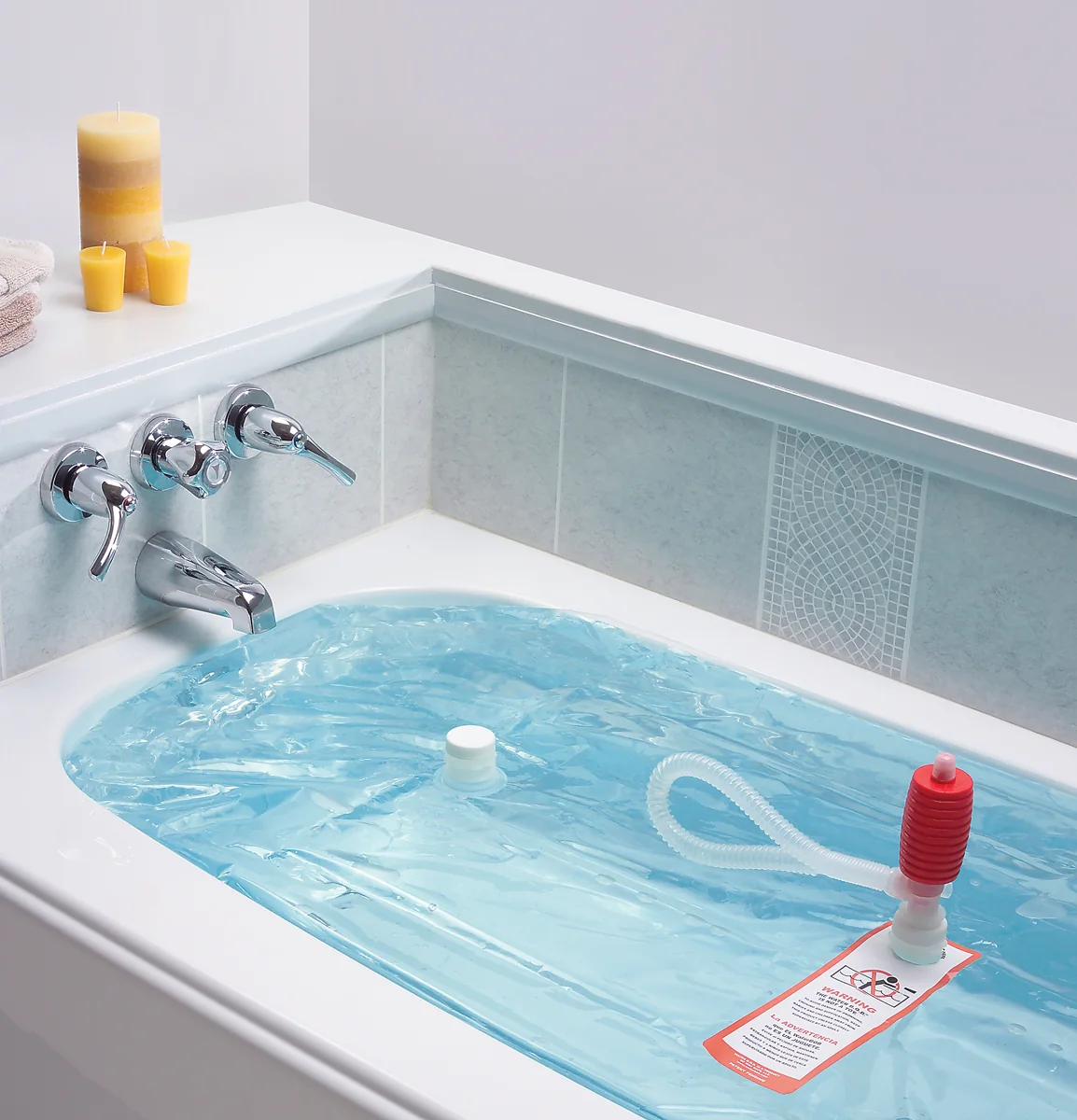
WaterBOB is not a filter. It's storage. It's a large liner you fill in your bathtub before a storm hits, holding up to 100 gallons. The maker says it keeps water fresh for up to 16 weeks. A pump is included to draw the water back out.
WaterBOB bathtub water storage (paid link)
AquaTru Classic is an everyday countertop option for families who still have power most days. It plugs into a normal wall outlet and is certified to NSF standards for reducing contaminants like lead and chlorine. It won't help if the power is out, so pair it with stored water and a portable filter.
AquaTru Classic countertop filter (paid link)
Waterdrop King Tank is a stainless 2.25-gallon gravity filter for home base, so it works with no power or plumbing. It improves taste and reduces chlorine; the maker lists NSF/ANSI 42 and NSF/ANSI 372 for its carbon filters. Those standards do not cover viruses, bacteria, or parasites, so for questionable water, boil or disinfect it first.
Waterdrop King Tank gravity filter (paid link)
Kids, older adults, pets, and special needs
Children, nursing mothers, and anyone who is sick may need more water than the standard amount. Hot weather can double what your family needs, so pack extra in summer or in a warm climate. Don't ration drinking water unless officials tell you to. Drink what you need today, and look for more for tomorrow.
Pack a water bowl and a stored water supply for every pet in the house.
Keep it fresh
- Check bottled water against its printed date.
- Swap homemade-filled water every 6 months.
- Replace your bottle of bleach once it is over a year old.
- Backwash your Sawyer filter when flow slows, and before long storage.
- Keep portable filters away from freezing temperatures.
- Plan to use WaterBOB water within about 16 weeks.
Printable checklist
- ☐ 1 gallon of water per person, per day, stored
- ☐ Water containers labeled and dated
- ☐ Bottle of plain, unscented bleach on hand
- ☐ Know your home's hidden water sources
- ☐ Portable filter packed in each go-bag
- ☐ Pet water bowl and supply packed
- ☐ WaterBOB or extra jugs ready before a storm
Where this advice comes from
- American Red Cross: Survival Kit Supplies
- Ready.gov: Water
- Ready.gov: Prepare Your Pets for Disasters
- CDC: How to Create an Emergency Water Supply
- CDC: How to Make Water Safe in an Emergency
- CDC: How to Find Clean Water in an Emergency
- EPA: Emergency Disinfection of Drinking Water
- FEMA: 7 Flood Safety Tips
Last checked against these sources: September 28, 2026.
Every pick above also sits with our other water filtration & storage picks.
See all Water Filtration & Storage picks on the Deals page →