
Cooking Without Power: Stove, Fuel and Meal Plan
Plan meals when the power is out: food that needs no cooking, how much fuel you need, carbon monoxide rules, and a week of pantry dinners for your family.
By Randall R. Russell, USMC Veteran
Health note: This is general information, not medical advice. Follow product labels and your doctor or pharmacist.
The power goes out at four in the afternoon. By six, everybody is hungry, the stove is electric, and somebody is standing in the kitchen with the fridge door open. This page is so that never happens at your house.
Work out how many meals you need, how you will heat them, how to do it safely, and what you will actually eat for a week. The free printable has the meal and fuel worksheets with lines to write on.
"She looketh well to the ways of her household, and eateth not the bread of idleness." ~ Proverbs 31:27 (KJV)
Step 1: Start With Food That Needs No Cooking
Ready.gov says power outages after a disaster could last for several days, and to stock canned foods, dry mixes and other staples that need no refrigeration, cooking, water or special preparation. It also says commercially canned food may be eaten straight out of the can without warming. Include a manual can opener and eating utensils.
The foods Ready.gov suggests include ready-to-eat canned meats, fruits and vegetables; protein or fruit bars; dry cereal or granola; peanut butter; dried fruit; canned juices; non-perishable pasteurized milk; high-energy foods; food for infants; and comfort foods. Choose foods your family will eat, and remember any special diets. Our 72-Hour Emergency Food Supply guide builds the first three days.
Step 2: Count Meals, Then Count Fuel
- Write down how many people you are feeding and for how many days.
- Decide which meals are no-cook (cold breakfast, sandwiches) and which need heat. Fewer hot meals means less fuel.
- For each hot meal, write down what it takes: boiling water for a pouch meal, or a pot on a burner for 15 minutes.
- Check your stove's label or manual for how many minutes one canister or tank burns. Multiply your hot meals by the burner minutes each one takes, then divide by the minutes one canister lasts. Round up. That is how many canisters or tanks you need on hand.
Just-add-water meals need water as well as heat. Count the water too. Our Emergency Food Buyer's Checklist shows how to read those labels.
Step 3: Pick Your Heat, and Use It Safely
Ready.gov lists alternative cooking sources you can use in an emergency: candle warmers, chafing dishes, fondue pots or a fireplace. It says charcoal grills and camp stoves are for outdoor use only.
Carbon Monoxide: The Rule That Does Not Bend
- Ready.gov says generators, camp stoves and charcoal grills should always be used outdoors and at least 20 feet away from windows.
- Never use a gas stovetop or oven to heat your home. Ready.gov says it raises your risk of carbon monoxide poisoning and of fires and burns.
- Not in the garage, not on a covered porch, not "just for a minute." Outside means outside.
- Put a battery-backup carbon monoxide alarm on every level of the house. If it sounds, get everyone outside right away. Then call 911.
The Indoor Option: Battery Power
A battery power station has no engine and burns no fuel, so it makes no exhaust. If you have one, a small electric kettle or hot plate can work indoors. Before you count on it, check the appliance's watts against the station's output rating, and remember that heating appliances use a lot of stored power fast. Size it with the sheet in our Power Outage Family Plan.
Step 4: Seven Meals From the Pantry
A week of hot dinners that come from stored food, with the heat each one needs. Swap in what your family actually eats.
| Day | Dinner | Heat needed |
|---|---|---|
| 1 | Fridge food, cooked within the first 4 hours | Outdoor grill or camp stove |
| 2 | Canned chili or stew over crackers | None, or warm it |
| 3 | Just-add-water pouch meals | Boiling water only |
| 4 | Rice or pasta with a canned sauce and canned meat | One pot, one burner |
| 5 | Peanut butter, crackers, canned fruit | None |
| 6 | Canned soup and a tin of beans | None, or warm it |
| 7 | Oatmeal or pancakes from a dry mix (dinner can be breakfast) | One pot or griddle |
Day 1 matters. The CDC says a closed fridge keeps food safe for up to 4 hours without power, so cook the fridge food first, inside that window, and save the shelf food for later. After 4 hours, throw out perishables. Thawed freezer food can be cooked only if it still has ice crystals or is 40°F or below. The Power Outage Family Plan has the full food-safety times.
Step 5: Gear for This Plan
One or two picks per item. Paid links are marked. We may earn a commission at no extra cost to you. More food picks live on our food gear page.
Meals That Only Need Hot Water
Mountain House Essential Assortment Bucket (paid link). 12 pouches and 22 total servings, gluten-free, just add water. Honest downside: the maker says it takes about 17 cups of water to prepare every meal in the bucket, so plan that into your water.
Indoor Heat Without Fumes
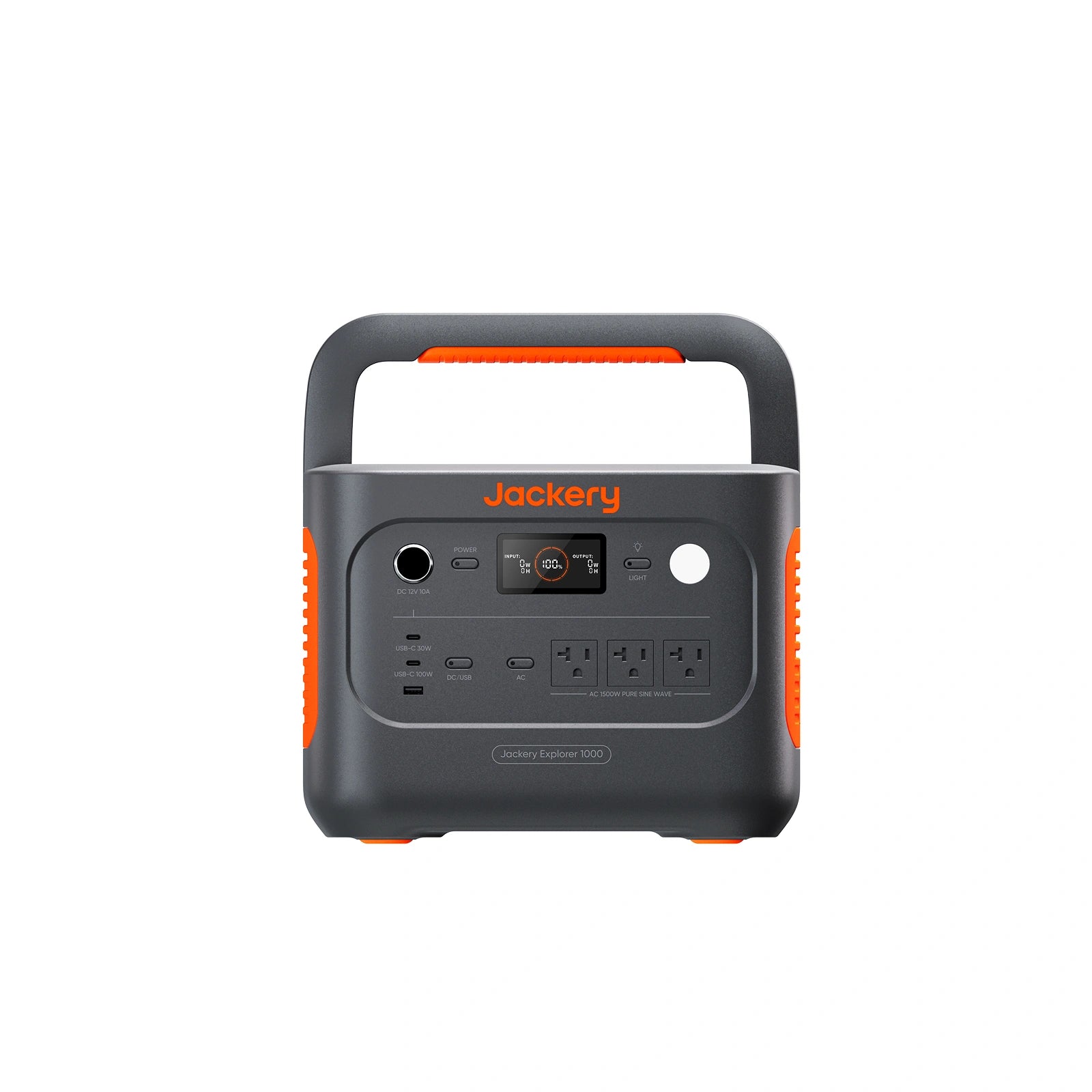
EcoFlow DELTA 3 Classic (1024Wh) (paid link) holds 1,024 watt-hours, and EcoFlow lists up to 1,800 watts of total AC output. Jackery Explorer 1000 v2 (paid link) holds 1,070 watt-hours and puts out up to 1,500 watts. Honest downside for both: heating water or food drains stored power quickly. Check your kettle or hot plate's watts against the station first, and keep cooking for the meals that need it.
Still on the List, No Pick Yet
An outdoor camp stove and its fuel, and a manual can opener. Buy them from any store you trust. We will add picks once we have ones we are willing to stand behind.
Get the Printable Plan
The free printable has the meals and fuel worksheet, the safety rules, the seven-meal plan with blanks for your own, and a fuel store and rotation log. Print it and keep it with the pantry. See all of our free printable guides.
Where This Advice Comes From
- Ready.gov: Food
- Ready.gov: Power Outages
- CDC: Keep Food Safe After a Disaster or Emergency
- Product details: each maker's own pages, as cited in our 72-hour food and backup power guides
Last checked against these sources: October 11, 2026 (Ready.gov and CDC). Product details as of our 72-hour food and backup power guides.
Your free printable plan
3 pages with lines to write on. No store links and no prices inside.
Every pick above also sits with our other emergency food supply picks.
See all Emergency Food Supply picks on the Deals page →