
Water Filter Chooser and Boil-Advisory Card
Pick the right water filter for your house by situation, learn what filters can't do, and print a boil-advisory card for the day the notice comes.
By Randall R. Russell, USMC Veteran
Health note: This is general information, not medical advice. Follow product labels and your doctor or pharmacist.
It is easy to buy a water filter before you know what problem you are solving. Then it can sit in a closet, or turn out to be the wrong kind for the day you need it. This page fixes the order. Figure out your situation first. Then pick. Then write down what to do the day the water company says boil.
If you have not stored any water yet, start there. Our Emergency Water for Your Family guide covers how much to store, where safe water hides in your house, and how to make water safe. This page is the decision sheet that sits next to it.
Step 1: Filter, Boil or Bleach
These three do different jobs. Know which is which before you spend money.
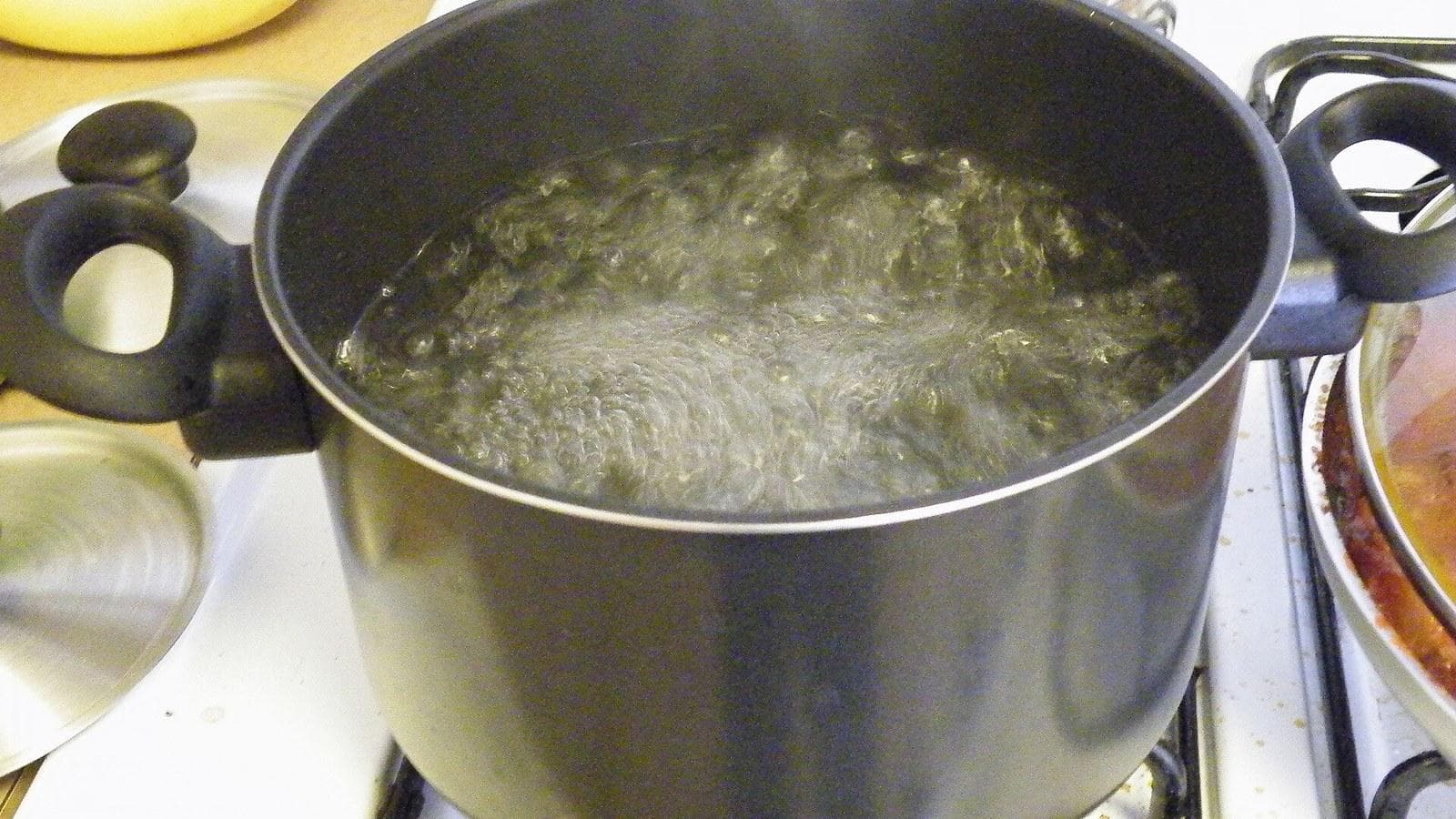
- Boiling kills bacteria, viruses and parasites. The EPA says to bring water to a rolling boil for at least one minute, and for three minutes above 5,000 feet. Ready.gov calls boiling the safest method.
- Disinfecting with bleach is the backup when you cannot boil. Use plain, unscented household bleach and follow the EPA steps for your bottle's strength. Our water guide prints them.
- A portable filter traps bacteria and parasites if its holes are small enough. The CDC says the absolute pore size must be 0.3 micron or smaller to trap bacteria. Portable filters like these do not trap viruses. Use one to back up boiling or bleach, not to replace them when viruses are a worry.
- A home carbon filter certified only to NSF/ANSI 42 is certified for taste, odor and chlorine, not germs. Check which NSF/ANSI standards the maker lists, and what those standards actually cover.
Step 2: Write Down Your Situation
Check what is true for your house. The printable has these boxes.
- ☐ We are on city water
- ☐ We are on a private well
- ☐ Our water needs power to run (well pump, softener)
- ☐ We lose power more than once a year
- ☐ Every adult has a go-bag that needs a filter
- ☐ We have small children or someone who is sick
- ☐ Our everyday tap water tastes bad
- ☐ We have had a boil water notice before
Well and power boxes both checked? Then an outage is also a water outage at your house. Read our Power Outage Family Plan next.
Step 3: Pick by Situation
Find your row. One or two picks each, no more. Paid links are marked. We may earn a commission at no extra cost to you. More of our water picks are on our water gear page, and the long comparison is in our water filter comparison.
| Your situation | What works | Our pick |
|---|---|---|
| Go-bag, car, every adult | Small portable filter; boil or disinfect when viruses are a worry | Sawyer Mini, or LifeStraw Personal for a kid's bag |
| Whole family filtering together | Two pouches, gravity tubing, faster flow | Sawyer Squeeze |
| Storm coming, water still on | Store water now | WaterBOB |
| Home base, no power | Gravity filter for taste and chlorine; treat questionable water first | Waterdrop King Tank |
| Home, power on, tap tastes bad | Countertop filter certified to NSF standards | AquaTru Classic |
Go-Bag and Car
Sawyer Mini (paid link). A tiny, 2-ounce filter rated by the maker for up to 100,000 gallons. It filters bacteria and parasites. Honest downsides: you need to backwash it now and then to keep the flow strong, and you should replace it if you think it ever froze.
LifeStraw Personal (paid link). A simple straw filter, good as a starter or for a kid's bag. The maker rates it for up to 1,000 gallons. Honest downside: like other straw filters, it is not built to remove viruses.
The Whole Family Filtering Together
Sawyer Squeeze (paid link). The same 0.1-micron absolute filtration as the Mini, with faster flow, and the kit adds two pouches and gravity tubing. Honest downside: same as the Mini, keep it from freezing and backwash it.
A Storm Is Coming and the Water Is Still On
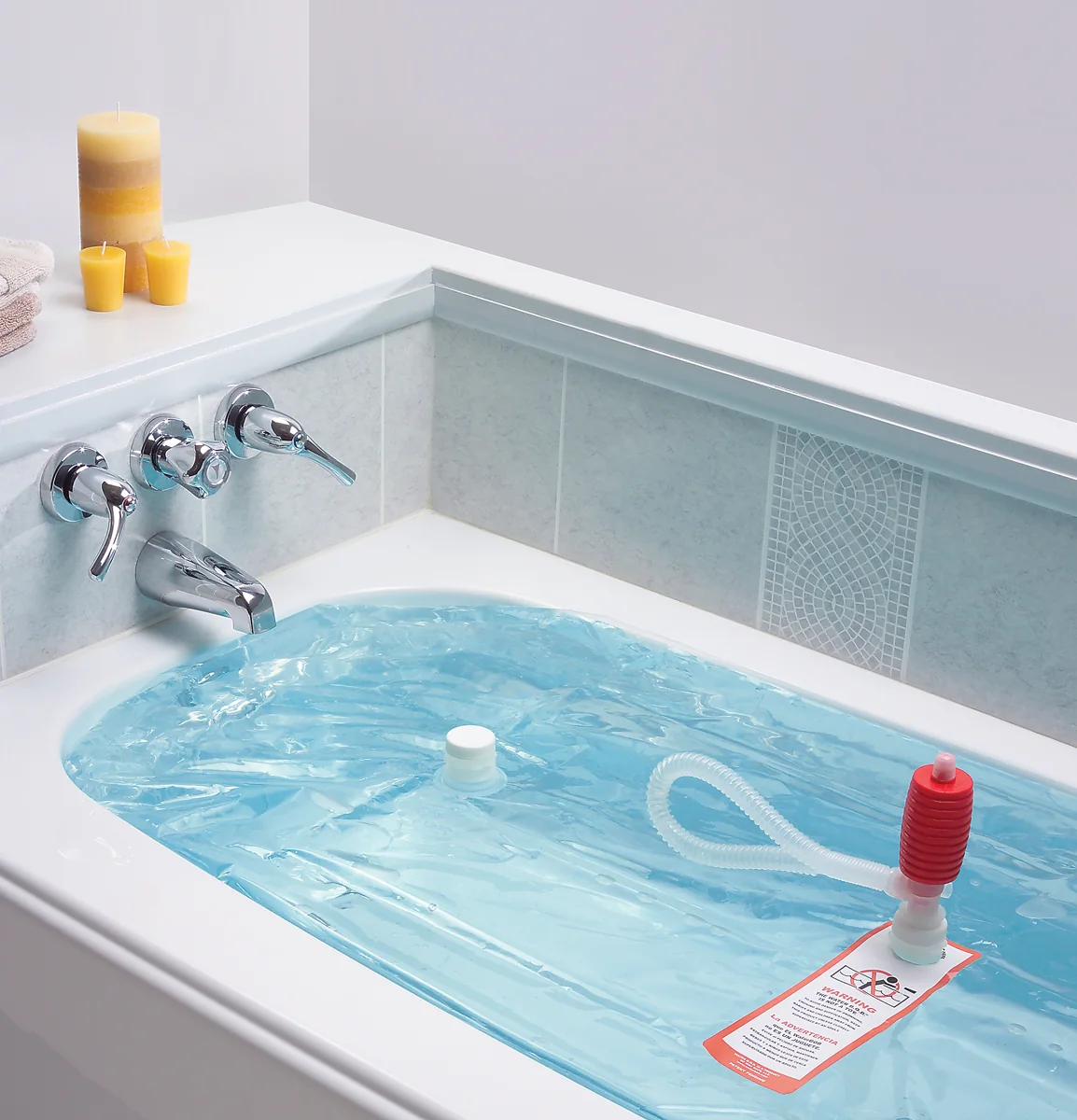
WaterBOB (paid link). Not a filter. It is a large liner you fill in the bathtub before the storm, holding up to 100 gallons, with a pump to draw the water back out. The maker says it keeps water fresh for up to 16 weeks. Honest downside: it only helps if you fill it before the water goes off, and the maker says most standard tubs hold about 60 to 70 gallons, not the full 100.
Home Base With No Power
Waterdrop King Tank (paid link). A stainless 2.25-gallon gravity filter that works with no power or plumbing. It improves taste and reduces chlorine; the maker lists NSF/ANSI 42 and NSF/ANSI 372 for its carbon filters. Honest downside: those standards do not cover viruses, bacteria or parasites, so boil or disinfect questionable water first.
Home With Power, Tap Tastes Bad
AquaTru Classic (paid link). An everyday countertop filter certified to NSF standards for reducing contaminants like lead and chlorine. Honest downside: it runs on wall power, so it cannot purify water during an outage. Pair it with stored water and a portable filter.
Step 4: Your Boil-Advisory Card
Print this part and tape it inside a kitchen cabinet. When a notice comes, nobody has to look anything up.
- Read the notice from your water company and follow it. It overrides this card.
- The EPA says to use bottled water, or water you have boiled, for drinking, cooking, making any drink, washing dishes and brushing teeth.
- Ready.gov adds washing or preparing food and making ice to that list.
- Boil: a rolling boil for at least one minute, three minutes above 5,000 feet. Let it cool on its own. Store it in clean, covered containers.
- Cloudy water: let it settle, then filter it through a clean cloth, paper towel or coffee filter before you boil.
- Cannot boil? Disinfect with plain bleach using the EPA steps. A portable filter alone does not handle viruses.
Write your water company's phone number on the card, where you hear notices (text alert, radio, website), and the date on your bleach bottle. Replace bleach once it is over a year old.
Step 5: Your Water Backup Line
Ready.gov says to store at least one gallon of water per person per day for several days. The Red Cross plans 3 days if you have to leave and 2 weeks if you can stay home. Multiply your people by your days. That is your line. The printable has a box for what you have, where it is, and when to swap it. Homemade-filled water gets swapped every 6 months.
Get the Printable Sheet
The free printable has the situation checklist, the pick-by-situation list, your water backup line, and the boil-advisory card to cut out. Print it and keep it with your water. See all of our free printable guides.
Where This Advice Comes From
- EPA: Emergency Disinfection of Drinking Water
- Ready.gov: Water
- CDC: How to Make Water Safe in an Emergency
- American Red Cross: Survival Kit Supplies
- Product details: each maker's own product pages (Sawyer, LifeStraw, WaterBOB, Waterdrop, AquaTru)
Last checked against these sources: October 11, 2026 (EPA and Ready.gov). CDC and product details checked against the CDC page and each maker's page.
Your free printable plan
3 pages with lines to write on. No store links and no prices inside.
Every pick above also sits with our other water filtration & storage picks.
See all Water Filtration & Storage picks on the Deals page →